FormulaPilot Blog
Facial Serum Formulating: How to Design a Lightweight Serum That Layers Comfortably
A lightweight facial serum is more about sensory feel than a single formula style. Here’s a practical way to prototype, test, and troubleshoot a serum that spreads easily and sits well under the rest of a routine.
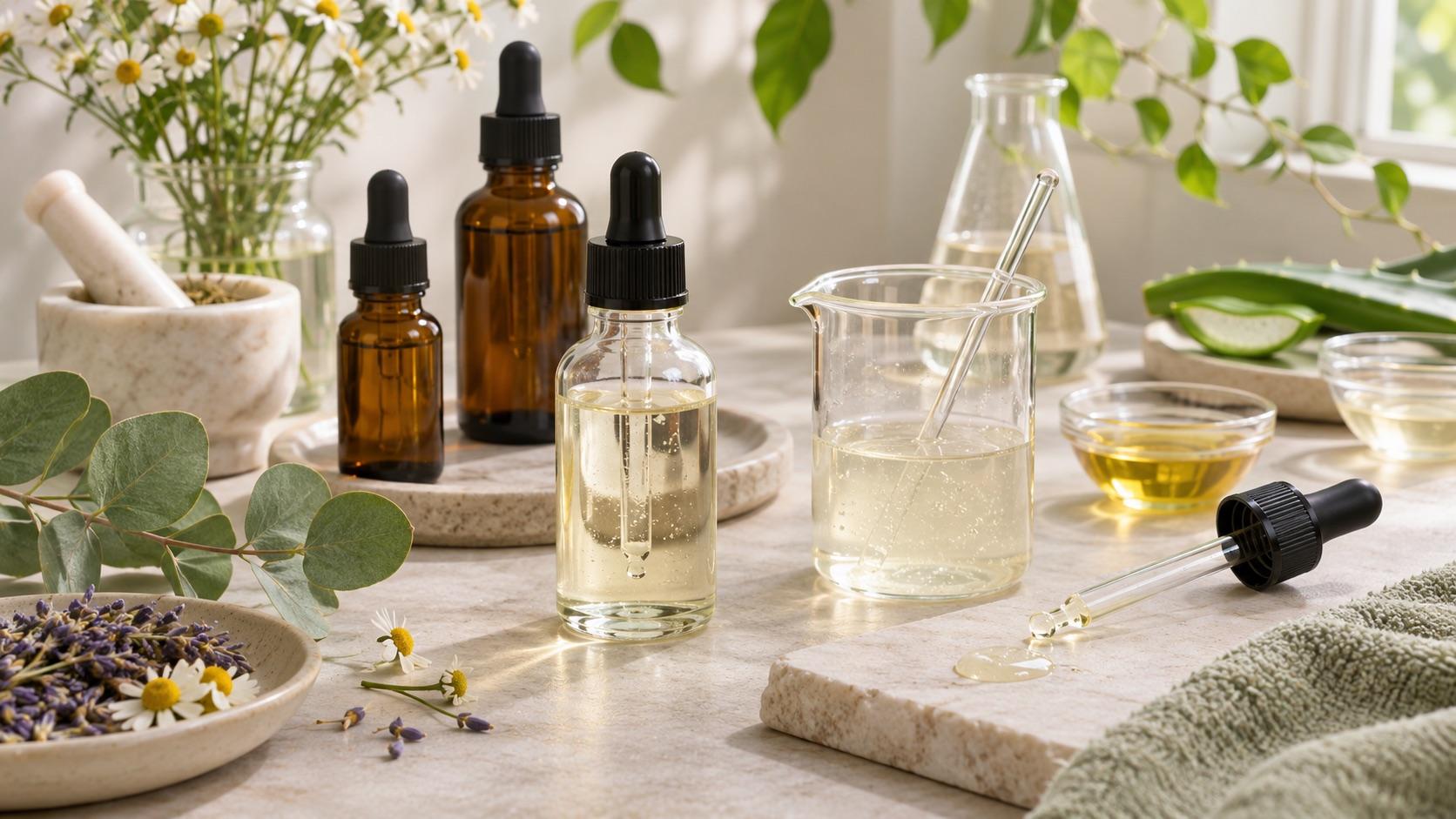
A lightweight facial serum is not a single formula category with one correct ingredient list. In practice, “lightweight” is a sensory result: the serum should spread easily, absorb in a reasonable time, leave minimal residue, and sit comfortably under the next step in a routine.
That framing is useful for small makers because it turns a vague goal into something you can actually test. Instead of chasing a universal “best” serum base, you can build a few small prototypes, change one variable at a time, and compare how each version behaves on skin and under common follow-up products like moisturizer or sunscreen.
Start with the feel you want, not just the ingredient list
When makers say they want a serum to feel lightweight, they usually mean some combination of these qualities:
- It spreads without dragging.
- It does not feel greasy or heavy after application.
- It absorbs without staying tacky for too long.
- It does not pill when layered.
- It leaves the skin feeling comfortable rather than coated.
Those are performance cues you can observe directly during development. They also keep the project grounded in cosmetic use and appearance, which matters when you later describe the product. In the U.S., cosmetic claims should stay focused on appearance, feel, cleansing, beautifying, or promoting attractiveness. If claims drift into treating disease or changing the skin’s structure or function, the product may be regulated as a drug instead of only a cosmetic.
Build prototypes in small, controlled steps
The easiest way to lose direction with serum development is to change too many things at once. If one version has a different oil phase, a different thickener, and a different preservative system, you may know that it feels better or worse, but not why.
A more useful approach is to make a small control batch and then prepare a few close variations. Keep batch size manageable so you can repeat the test without wasting materials.
A simple comparison plan might look like this:
- Prototype A: your control formula
- Prototype B: same formula with a slightly different water-to-oil balance
- Prototype C: same formula with a slightly lower or higher thickener level
- Prototype D: same formula with one emollient swapped for another
This kind of progression helps you identify which change improves spread, reduces tack, or makes the finish more comfortable. FormulaPilot can be helpful here because it lets you document each small adjustment clearly, so your notes on feel and layering are tied to the exact version you tested.
Pay attention to the three places lightweight serums usually go wrong
A serum can miss the “lightweight” goal in several different ways, and each one points to a different kind of adjustment.
1. It feels slick at first, then oddly heavy
This often shows up when the product spreads quickly but leaves a lingering film that competes with the next product in the routine. The serum may seem elegant for the first few seconds, then start to feel richer than intended.
In development, this is a good moment to compare emollient choices rather than assuming the whole formula direction is wrong. If your structure is otherwise sound, changing the emollient profile may alter afterfeel more effectively than rebuilding the formula from scratch.
2. It absorbs, but stays tacky
A serum can be low in oil and still feel less lightweight than expected if tack dominates the finish. Makers sometimes interpret this as “it needs more richness,” when the real problem is that the skin feel after dry-down is unbalanced.
This is where a small thickener adjustment or a modest shift in phase balance can be worth testing. You are not looking for a miracle percentage that works for every formula. You are checking whether a slight change improves glide and dry-down without making the serum too thin or unstable.
3. It looks fine alone, but pills under moisturizer or sunscreen
Layering is part of the product experience. A serum that feels pleasant on bare skin can still fail in use if it rolls, bunches, or resists the next product. That does not necessarily mean the serum is “bad.” It means the layering behavior needs to be part of your evaluation, because many customers will not use a facial serum by itself.
For this reason, a lightweight serum test should always include at least one realistic follow-up step.
Test for application, dry-down, and layering in the same session
A comfortable facial serum is judged over time, not only at first touch. As you compare prototypes, use the same amount of product, the same application area, and the same follow-up timing.
A short sensory checklist can keep your observations consistent:
- How easily does it spread on first contact?
- Does it feel watery, silky, cushioned, or draggy?
- How long does noticeable tack last?
- Is there visible shine or a coated look after dry-down?
- Does moisturizer glide over it or catch?
- Does sunscreen apply evenly over it or start to pill?
These observations are simple, but they are often more useful than vague notes like “pretty nice” or “too much.” The more specific your language, the easier it becomes to connect formula changes to performance changes.
After the checklist, write a sentence or two about the overall impression. A serum can score well on individual points and still feel unconvincing as a finished product. That final impression matters because it is often what customers notice first.
Prototype around one practical question at a time
If your goal is a lightweight serum that layers well, choose a single development question for each round. This keeps the work focused and helps you avoid circular testing.
For example:
- Does a slightly thinner structure improve layering, or does it just make the serum feel flimsy?
- Does reducing the richer-feeling portion improve comfort, or does it remove too much slip?
- Does an emollient swap reduce residue without increasing drag?
These are better development questions than “How do I make this feel expensive?” because they lead to testable changes. Once you answer enough of these small questions, the finished serum usually becomes clearer.
Use packaging as part of the formula test
A serum that feels elegant from a lab beaker may feel completely different from its actual package. Dispensing style affects dose, and dose affects skin feel. A pump that delivers too much can make a balanced formula seem heavy. A dropper can encourage over-application. A narrow opening can make a fluid serum feel awkward even if the sensory profile is excellent.
That is why finished-product testing should happen in the intended packaging and under realistic conditions of use. FDA guidance for cosmetic businesses is clear on the larger point: companies are responsible for product safety and should use testing appropriate to the product and its ingredients. There is no single FDA-mandated safety test for every cosmetic, so the responsibility is on the maker to evaluate the formula appropriately.
For a facial serum, realistic conditions include repeated opening and closing, normal dispensing, and actual routine layering. Comfort is not just about the formula in theory; it is about the formula as the customer will use it.
Troubleshooting common “not lightweight enough” results
Sometimes the formula is close, but one part of the user experience keeps pulling it away from the lightweight goal.
- If it feels rich only after the second application, test whether users are dispensing too much from the package.
- If it feels elegant at night but heavy during the day, repeat tests under sunscreen rather than judging it only as a standalone product.
- If it feels light for one tester and sticky for another, compare application amount and skin prep before changing the formula.
- If it pills only after a few minutes, test different wait times between serum and the next step.
These checks matter because a sensory problem is not always a formula problem. Sometimes the issue is dose, sequence, or timing. Separating those factors can save you from over-correcting a formula that was already close.
Keep your product language honest
As you refine the formula, it is tempting to let performance notes drift into stronger claims. A serum can absolutely be described in cosmetic terms like lightweight, smooth, fast-absorbing, or comfortable under makeup if those descriptions are truthful and supported by the product experience you observed.
What you should avoid is language that implies the serum treats a skin condition or changes the skin’s structure or function. FDA distinguishes cosmetic claims from drug claims, and that line matters just as much for a small handmade business as it does for a larger brand.
In other words, “layers comfortably under moisturizer” is a practical cosmetic description. “Repairs skin barrier function” or “treats inflammation” enters very different territory.
A better goal than “ultra-light”
Many makers chase the lightest possible feel, but that is not always the same as the best user experience. A serum can be so stripped-back that it loses slip, comfort, or compatibility with the rest of a routine. The more useful target is balance: enough body to apply well, enough elegance to avoid heaviness, and enough compatibility to layer without fuss.
That is why prototype comparison is so valuable. You are not trying to prove that one ingredient is universally best. You are trying to find the version that behaves best in your formula, package, and use pattern.
For small makers, that mindset is often the difference between a serum that sounds appealing on paper and one that genuinely feels good in the customer’s hand.
Final thought
Designing a lightweight facial serum that layers comfortably is really an exercise in careful observation. Treat “lightweight” as a sensory target, not a marketing shortcut. Change one variable at a time, test the serum in its real package, and judge it not only on first touch but also on dry-down and layering.
When you work that way, your notes become much more valuable, your troubleshooting gets faster, and the final formula is more likely to feel intentionally designed rather than accidentally acceptable.
References
- Cosmetics Labeling Claims — U.S. Food and Drug Administrationhttps://www.fda.gov/cosmetics/cosmetics-labeling/cosmetics-labeling-claims
- Cosmetics Labeling — U.S. Food and Drug Administrationhttps://www.fda.gov/cosmetics/cosmetics-labeling
- Small Businesses & Homemade Cosmetics: Fact Sheet — U.S. Food and Drug Administrationhttps://www.fda.gov/cosmetics/resources-industry-cosmetics/small-businesses-homemade-cosmetics-fact-sheet
- Summary of Cosmetics Labeling Requirements — U.S. Food and Drug Administrationhttps://www.fda.gov/cosmetics/cosmetics-labeling-regulations/summary-cosmetics-labeling-requirements
- FDA Authority Over Cosmetics: How Cosmetics Are Not FDA-Approved — U.S. Food and Drug Administrationhttps://www.fda.gov/cosmetics/cosmetics-laws-regulations/fda-authority-over-cosmetics-how-cosmetics-are-not-fda-approved-are-fda-regulated
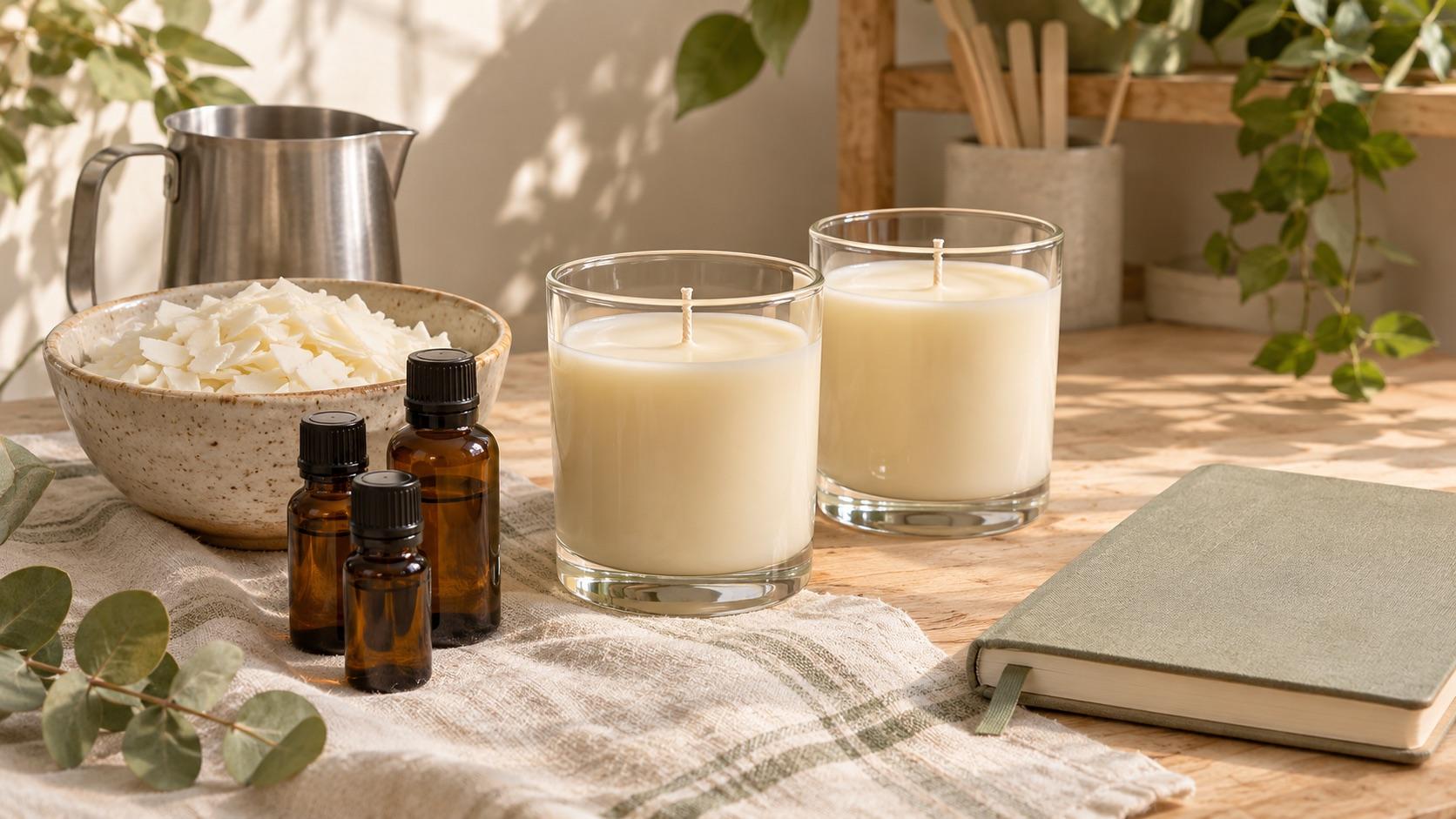
Handmade Candle Testing: How to Compare Wax and Fragrance Combinations Without Confusing the Results
A good candle test does not start with scent alone. It starts by proving that your wax, vessel, and wick behave well together, then comparing fragrance options in that stable setup so your results are easier to trust.
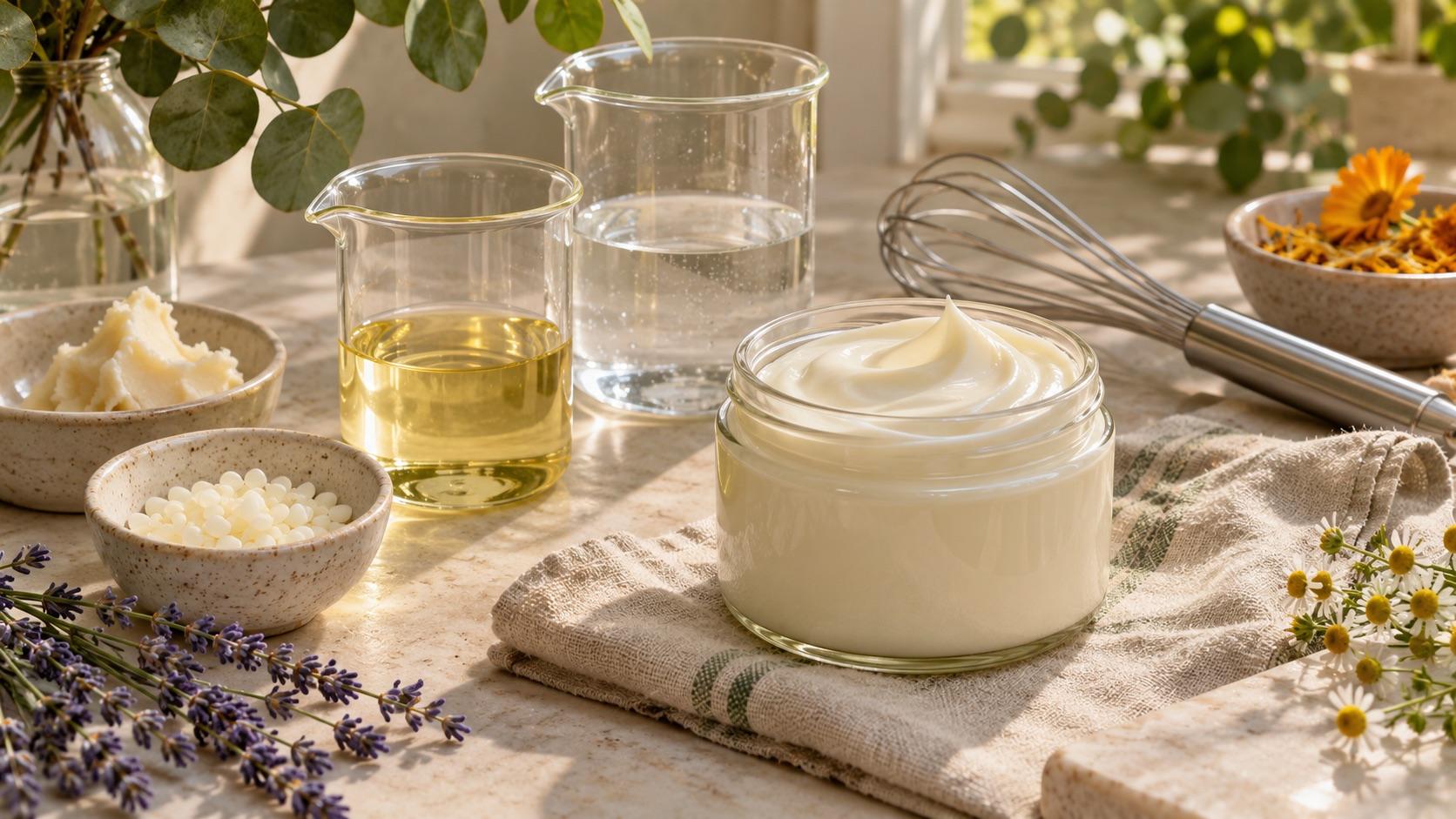
Lotion Making: What Keeps Oil and Water Together in a Homemade Lotion?
Homemade lotion stays mixed because it is an emulsion, not just oil and water stirred together. The ingredient doing the heavy lifting is the emulsifier, which helps tiny droplets stay dispersed instead of separating back into layers.

Inventory Planning for Makers Who Formulate Lotions, Salves, Soaps, and Candles
Good inventory planning helps makers stay in stock, reduce waste, protect quality, and understand real product costs. Here’s a practical approach for formulators working with lotions, salves, soaps, and candles.